
Around the Bend: A Water Policy Recap and a 2026 Look Ahead
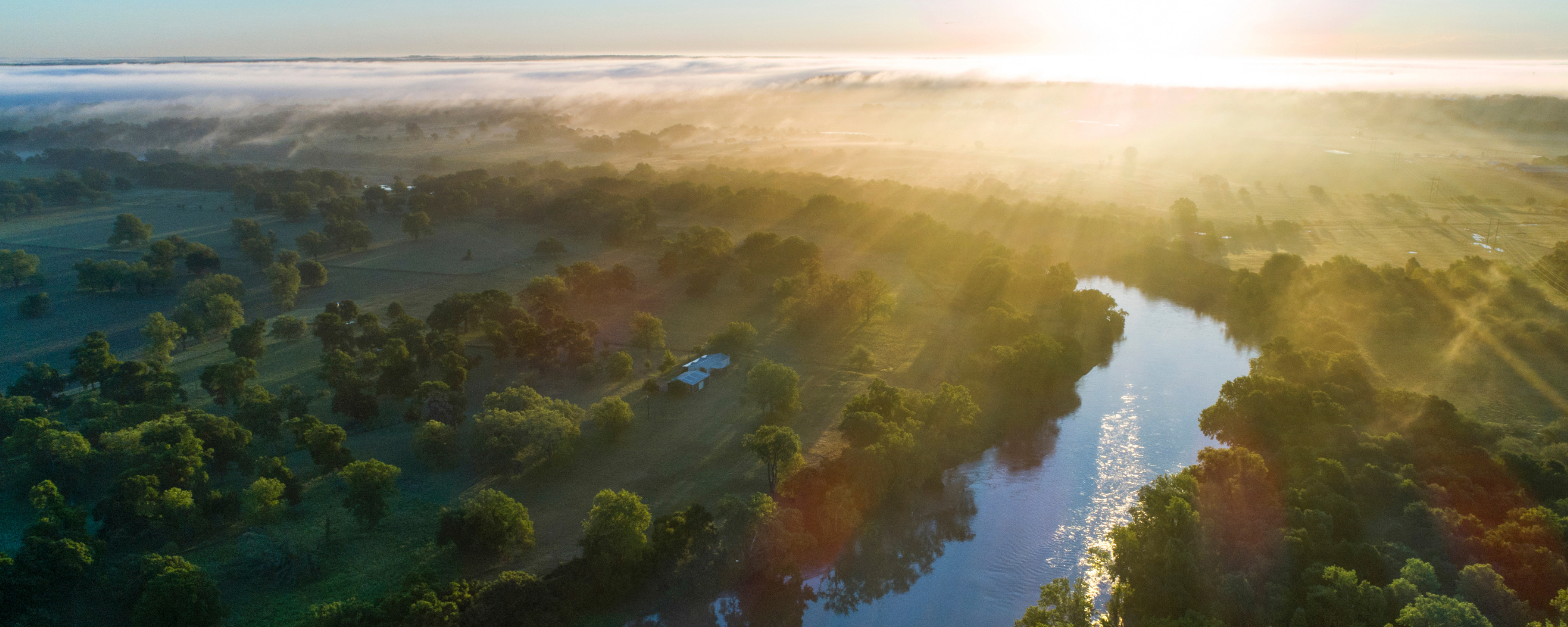
Morning fog on the Colorado River. Photo by Eric Schlegel
January 27, 2026
Written by Alan Leonard, TWF Director of Policy
Austin, TX - 50 weeks from today, the 90th Texas Legislature will convene and start its 140 day session sprint. However, much of this work will build on what took place in 2025 and take place this year.
2025 joined the ranks of 1917, 1957, and 1997 as landmark years in the history of Texas water infrastructure and policy. On November 4, voters approved Proposition 4 (Prop 4), which dedicates up to $20 billion total in sales tax revenue to the Texas Water Fund to be used exclusively on water projects and strategies from 2027 to 2047.
With this progress for infrastructure funding also came a reminder of water’s power to impact lives and landscapes. Tragically, the Hill Country devastation on July 4 added 2025 to the list of years where Texas experienced catastrophic flooding.
As historic and tragic as 2025 was for Texas water, what comes next will shape water security for many generations. There is still much coming around the bend.
WHERE WE ARE HEADED: WORK AT THE STATE LEVEL
While 2026 may technically be an “interim year” at the Texas Capitol, it will not be idle. 2026 will build on the changes and opportunities that emerged in 2025 in preparation for the next Legislative Session and Prop 4 funding dedications, both happening in 2027. Principal among these opportunities are key milestones at Texas state agencies:
Texas Water Development Board (TWDB), now with all board member seats filled, has begun updating its financial assistance programs to incorporate new statutory requirements that prioritize existing rights of way and joint planning for water conveyance projects. Other key updates include:
TWDB is nearing the end of its five year state water planning cycle, with regional water plans adopted this month, and is expected to finalize the updated State Water Plan in 2026. Projects and strategies must be in this plan to be eligible for funding from the State Water Implementation Fund for Texas (SWIFT) Fund.
TWDB has begun and will continue to issue financial assistance from supplemental funds provided in 2025. The Legislature has tasked TWDB with completing feasibility studies during 2026, including one (in SB 7) on incorporating wastewater needs in the State Water Plan.
Texas Commission on Environmental Quality (TCEQ) is slated to propose rules in April 2026 regarding the land application of produced water from oil and gas extraction that is treated for beneficial uses. This permitting authority was transferred to TCEQ through SB 1145. TCEQ also received supplemental funds to improve cybersecurity practices following recent intrusions of water systems.
The Public Utility Commission (PUC) is currently updating its rules regarding private water system improvement charges due to SB 740 which puts a 60 day timeline on a process that currently takes 120 days. PUC also has requirements for privately owned water utilities to include their drought contingency plan and enforcement measures in their rate filings.
While interim charges for both House and Senate are still being fielded and finalized, we expect a continued focus on infrastructure funding, data center resource consumption, flood preparedness, and groundwater management.
WHERE WE ARE HEADED: WORK ON THE FEDERAL LEVEL
What happens in Washington will also affect water in Texas. Funding for water operations and financial assistance at the Environmental Protection Agency (EPA), Army Corps of Engineers, and Bureau of Reclamation for 2026 became law on January 23. Federal funding legislation provides:
$1.13 billion total nationwide for drinking water State Revolving Fund (SRF). This is the same amount appropriated last year. Of this amount, 64% is set aside to pay for related congressional earmark projects.
$1.64 billion total nationwide for clean water SRF. This is the same amount appropriated last year. Of this amount, 54% is set aside to pay for related congressional earmark projects.
$64.6 million for the Water Infrastructure Finance and Innovation Act (WIFIA) program which provides supplemental, flexible, low-cost loans to public and private borrowers for all types of wastewater, drinking water, and stormwater projects. Pflugerville, TX received $176M in WIFIA loans in late 2025.
While allocations to states have not been finalized, in 2025 EPA allocated Texas about 8% of the FY25 drinking water SRF base appropriation ($87 million) and 4.4% ($72.5 million) in clean water SRF base appropriations. Similar amounts could be expected for 2026. In addition, Congress must re-authorize both of the SRFs in federal law. Related hearings and actions are underway.
EPA also continues to amend its approaches to safeguarding water resources, including updates to its definition of ‘Waters of the United States’ in response to recent U.S. Supreme Court decisions and revisiting some of its regulations for PFAS (a.k.a. ‘forever chemicals) in drinking water systems. In addition, Congress will continue work to finalize a 2026 Water Resources Development Act (WRDA) that authorizes USACE Civil Works studies and projects to improve harbors and rivers. For context, seven Texas projects were listed in the 2024 WRDA.
As the tip of the iceberg above illustrates, important work on water for Texas continues into 2026 in a variety of forums, including Congress, the Texas Capitol, state agencies, and local communities on the front lines of water security for Texas. Texas Water Foundation will be monitoring and supporting conversations on a number of these topics, so please follow us online and/or our news page to stay up to date.